Notes
How Growing Regions Shape Coffee Flavor
Origin gives you a starting point. The individual lot gives you a clearer story.
Field Notes Course · Lesson 06 of 10
Use regional flavor tendencies responsibly and recognize variation within a country.
A region bundles several influences
Origin combines environmental conditions with the plants and practices common in a place. That makes it useful information, but a country is too large a unit to predict every cup. The region, producer, variety and process narrow the picture. Think of a country name as the beginning of the description, not the complete tasting note.

Three examples to begin exploring
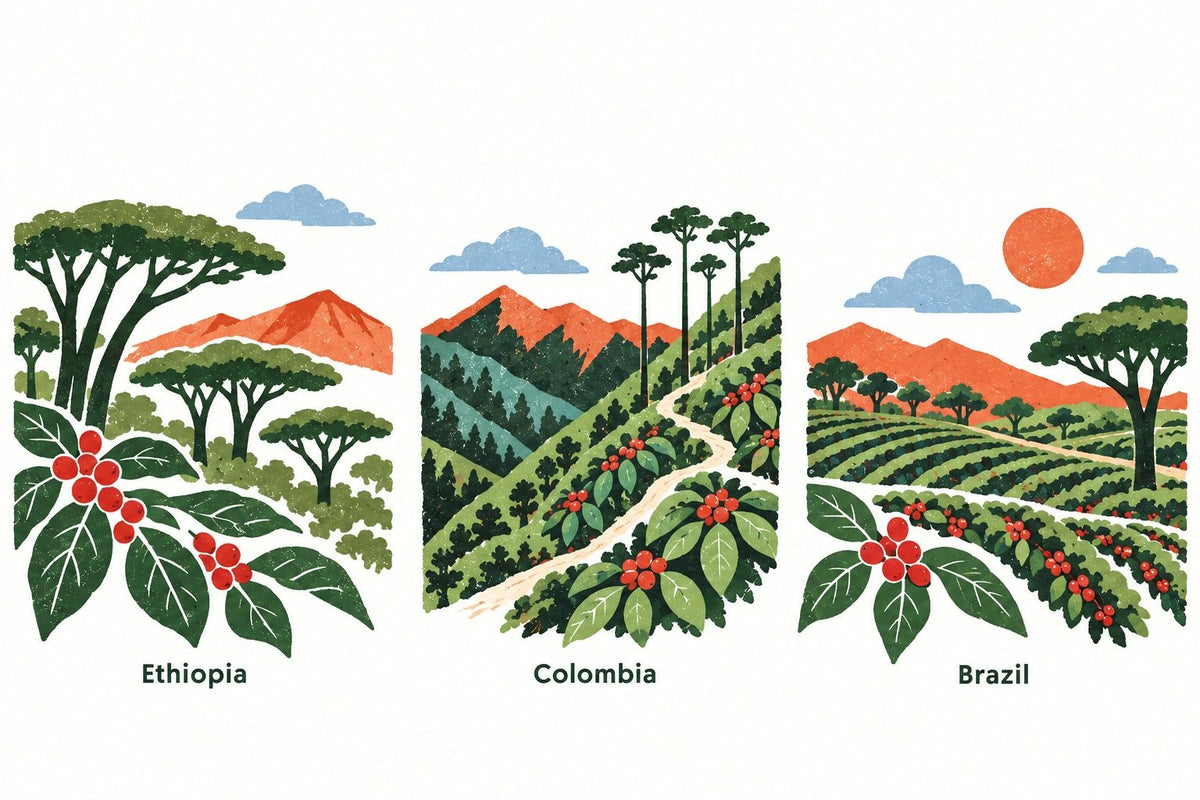
Washed Ethiopian coffees are often discussed through floral and citrus descriptors; Counter Culture’s Ethiopian Apollo is one specific commercial example. Colombia’s own coffee-grower organization describes different regional profiles rather than a single national flavor: its Santander description includes sweetness, fruit and a balanced cup. Brazilian origin descriptions frequently feature chocolate, caramel or nut notes; a Brazilian sourcing business describes these in Sul de Minas and Cerrado Mineiro while also identifying other regional expressions. These are examples and tendencies, not promises about every coffee from those countries.
The plant can travel
Genetics do not stop at national borders. A study of Ethiopian coffee germplasm grown in a Colombian collection evaluated sensory variation among the plants under a shared experimental setting. That is a useful reminder that a plant’s genetic background and its growing location are different pieces of information. A familiar variety can be planted in a different country, and a single country can contain substantial genetic diversity.

Processing can redirect expectations
When two lots from one region use different processing approaches, their cups may differ substantially. Likewise, two coffees from different countries can share a similar sensory character. The word origin does not separate nature from human decisions; it introduces both. Ask whether the flavor description comes from tasting the specific lot or from a general expectation about the country.
Build your own regional reference
Taste coffees from three origins at comparable roast levels. Record aroma, acidity, sweetness, body and finish before reading the bag notes. Then add the region, elevation, variety and process to your record. Return to another lot from the same place later. Over time, you will build a more useful understanding than a fixed map claiming Ethiopia equals flowers, Colombia equals caramel and Brazil equals chocolate.
Name three lot details that tell you more than the country alone.
Show the answer
Region or producer, variety and processing method are useful examples; elevation and harvest information can add context.
← Lesson 05: High-Elevation and Low-Elevation CoffeeLesson 07: The Wildlife Around a Coffee Farm →
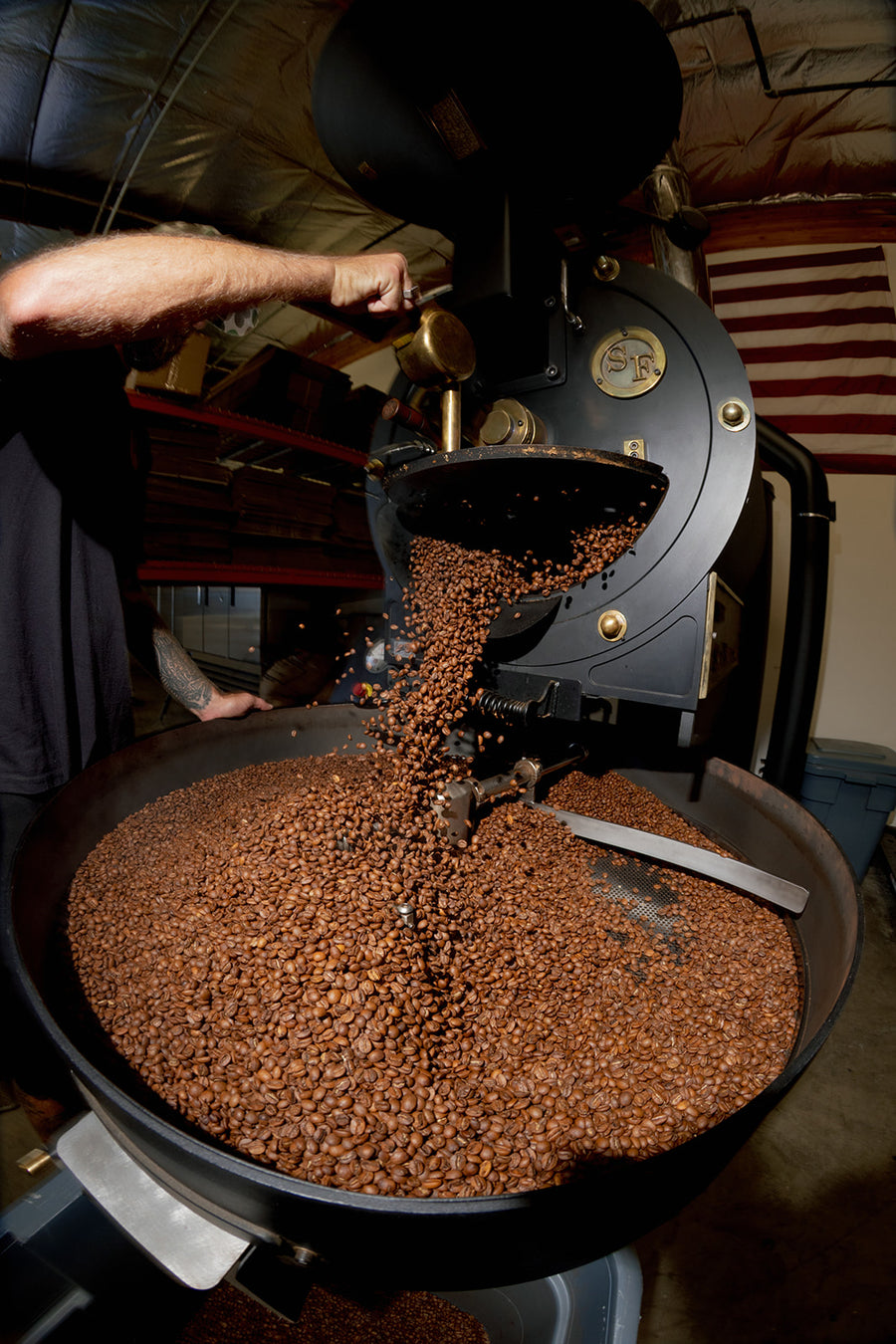
Our Nayarit coffee comes from one farm in El Cuarenteño, grown under shade and roasted every week in North County.
Sources
- Counter Culture Coffee, Apollo Ethiopian coffee description
- Cafe de Colombia, Regional designations of origin
- Fazenda 1888, Brazilian origin descriptions
- Sensory characterization of Ethiopian germplasm grown in Colombia 2025
Illustrations are simplified teaching drawings, not pictures of a specific farm we buy from.

Field Notes,
in your inbox.
One email a month with new Field Notes.