Notes
How to Read Coffee Sourcing Claims
Specific answers help you understand what a label can actually tell you.
Field Notes Course · Lesson 10 of 10
Distinguish shade-grown descriptions, organic certification and Bird Friendly certification.
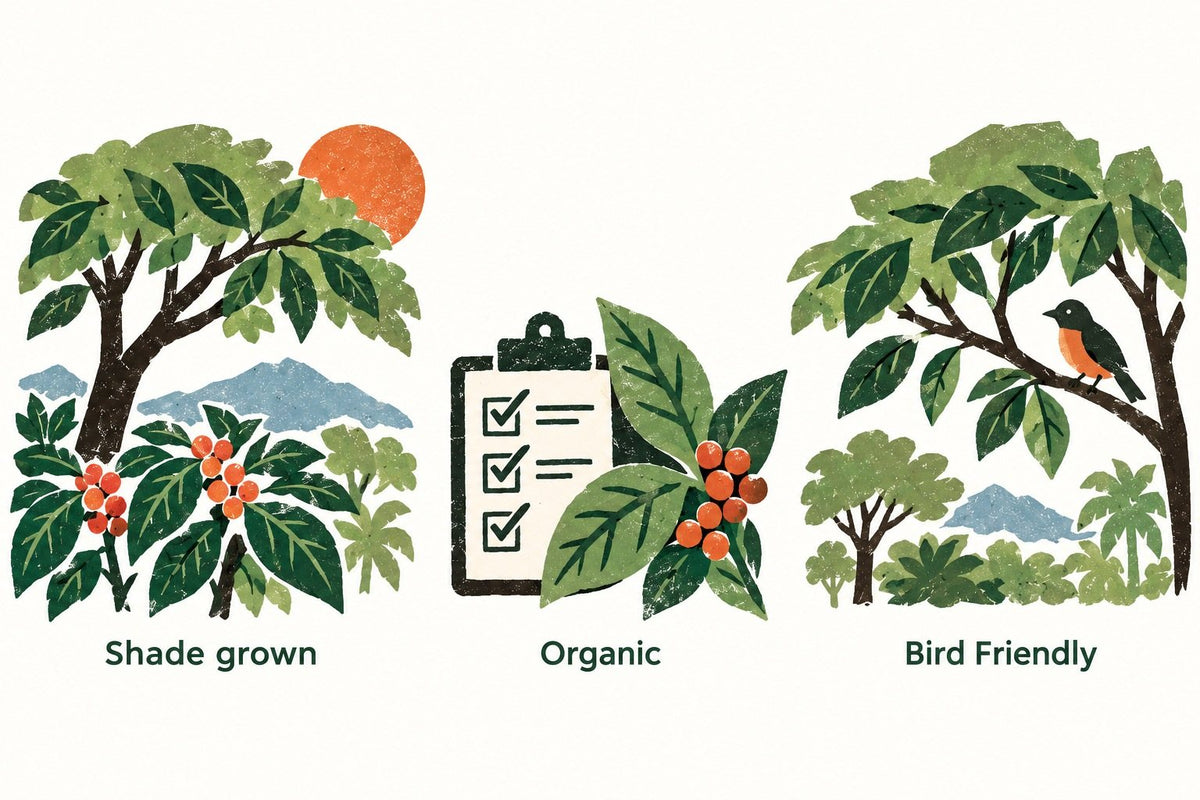
Three terms, three questions
Shade grown describes a growing system involving overhead shade. Organic refers to production and handling requirements under a certification system. Smithsonian Bird Friendly certification combines organic certification with habitat requirements. The terms overlap in some coffees, but they are not interchangeable. An organic coffee is not automatically evidence of a diverse shade canopy, and a shade-grown description is not automatically evidence of organic or Bird Friendly certification.

Organic does not mean no inputs
USDA organic rules distinguish allowed and prohibited substances and practices. They do not establish that a farm uses no pesticides or fertilizers of any kind. The National List identifies exceptions and restrictions. For customers, the practical lesson is to read organic as a verified production claim, rather than replacing it with an inaccurate promise such as chemical free.
Ask about the specific coffee
Start with four questions: Which farm, cooperative or producer group supplied this coffee? What kind of shade is documented? Which claims are independently verified? How was the lot processed? A clear answer can be short. It should connect the claim to the coffee being sold rather than merely describing the roaster’s general values.

Separate illustration from evidence
Use artwork to learn the concepts and sourcing records to verify the coffee. Elevation, canopy practices and certification should come from information about the actual lot. The illustrations in this course explain general ideas; they do not document particular supplier farms.
Build a better reading habit
Put the bag’s information into two categories: details you have, and questions still open. A label might give country, process and tasting notes but omit the producer or canopy practices. That absence is a reason to ask, not a reason to invent an answer. If the seller does not have a detail, an honest statement of that limit is more useful than a sweeping sustainability claim.
Bring the course together
You now have a way to read a coffee beyond its name: identify the plant and growing structure, understand soil and water, interpret local climate and elevation, then follow the lot through processing and brewing. The aim is to make coffee more understandable while respecting both the farmer’s work and the evidence behind the story.
Write one question you would ask a roaster about shade, and one about verification.
Show the answer
For example: Which shade-tree practices are documented for this lot? Which certification, if any, applies to the coffee being sold?
← Lesson 09: What Builds Coffee Flavor
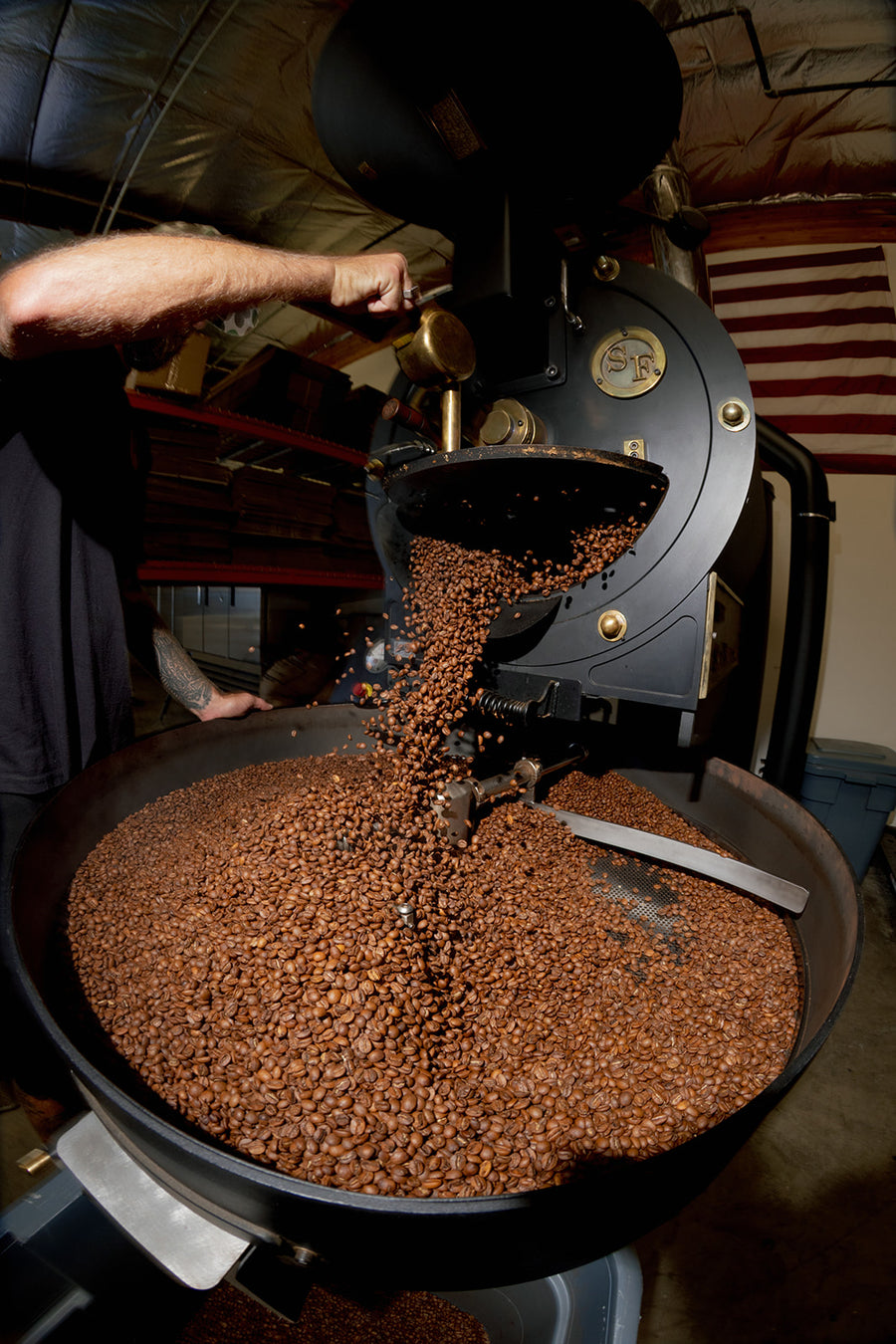
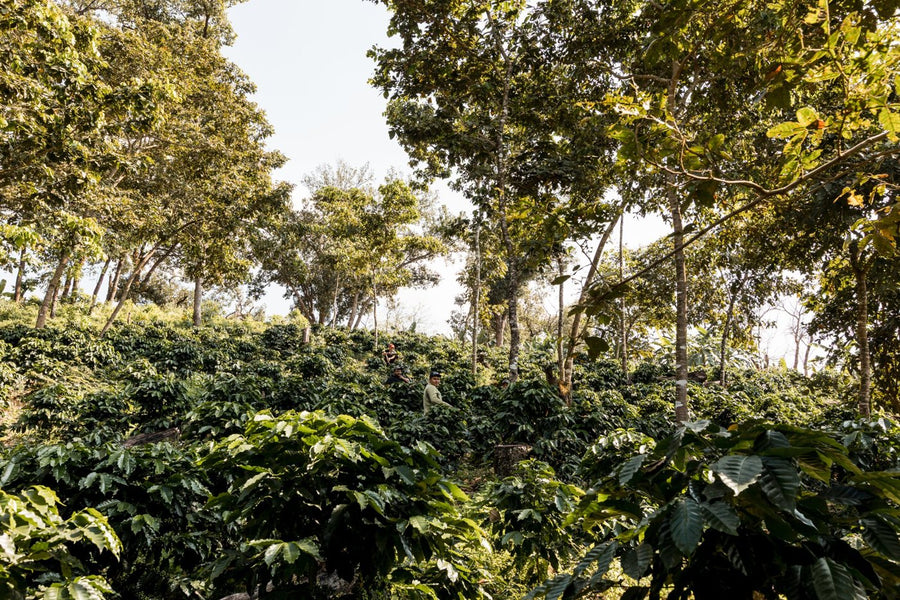
Our Nayarit coffee comes from one farm in El Cuarenteño, grown under shade and roasted every week in North County.
Sources
- Smithsonian, Bird Friendly Coffee FAQs
- USDA Agricultural Marketing Service, Organic Standards
- USDA Agricultural Marketing Service, The National List
Illustrations are simplified teaching drawings, not pictures of a specific farm we buy from.
Field Notes,
in your inbox.
One email a month with new Field Notes.